

Reps move to harmonise money laundering, proceeds of crime laws
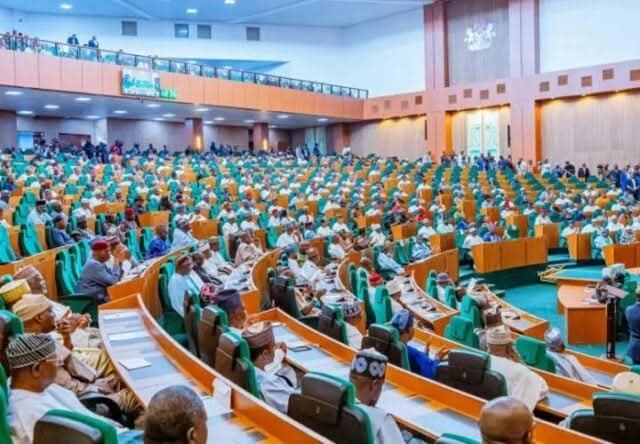
The House of Representatives on Tuesday passed for second reading a bill seeking to amend the Proceeds of Crime (Recovery and Management) Act and related laws, with the aim of harmonising Nigeria’s anti-corruption and asset recovery legal framework.
Leading the debate on the general principles of the bill, Plateau lawmaker, Yusuf Gagdi, said the proposed amendments are designed to close existing legal gaps that have hindered effective recovery, management, and disposal of assets derived from unlawful activities.
Last week, we passed the bill to amend the Act establishing the Economic and Financial Crimes Commission. You cannot reform the anti-corruption sector without simultaneously addressing the Proceeds of Crime (Recovery and Management) Act and the Money Laundering Act,” he said.
He noted that deficiencies in the current legal framework have created procedural challenges for agencies responsible for asset recovery.
The new bill, he explained, seeks to provide a unified and comprehensive structure to guide the recovery, management, and disposal of proceeds of crime in Nigeria.
Gagdi added that the legislation also introduces provisions for whistleblower and witness protection mechanisms.
“When enacted, the law will safeguard the rights of whistleblowers and witnesses who testify in corruption cases.
“It will also strengthen non-conviction-based asset recovery by allowing confiscation of property reasonably suspected to be proceeds of crime, even without a criminal conviction,” he stated.
The proposed amendment introduces a new Section 81, which empowers relevant agencies to receive and act on credible information while ensuring the safety of whistleblowers.
It also seeks to streamline judicial procedures by establishing clear timelines for publication, responses, and hearings in asset recovery cases.
Furthermore, the bill recognises digital and virtual assets as potential instruments or proceeds of crime, proposing the establishment of a national registry and a dedicated digital wallet managed by the Central Bank of Nigeria for holding such assets.
Describing the legislation as a “forward-looking reform,” Gagdi said it would consolidate Nigeria’s anti-corruption architecture, enhance transparency, and build public confidence in the justice system
This bill will make asset recovery more efficient, strengthen institutional capacity, and improve Nigeria’s ability to trace, recover, and manage proceeds of crime both domestically and internationally,” he concluded.
In his ruling, the Speaker, Abbas Tajudeen, referred the bill to the House Committee on Financial Crimes for further legislative action
